With the global iteration of optical communication technology and the surge in demand for high-performance computing, silicon photonics technology has entered a period of explosive mass production due to its core advantages of high integration, low power consumption, and low cost. Wuhan Yitiannuo, as a core enterprise in the domestic silicon photonics packaging and testing equipment field, has accurately grasped industry trends and taken the independent control of core components as a breakthrough. It has focused on several key dimensions, including selfdeveloped components and instruments , supplemented by upgrades to its R&D system and collaborative efforts across the industrial chain,comprehensively strengthening its silicon photonics mass production service capabilities and laying a solid foundation for undertaking large-scale mass production demands.
I. Self-developed Motors Overcome Precision Bottlenecks and Safeguard the Stability of Mass Production Equipment
Mass production of silicon photonics places extremely high demands on the motion control precision, speed, stability, and size compatibility of packaging and testing equipment. As the core power component of the equipment, the motor directly determines the efficiency and yield of key processes such as wafer testing and optocoupler. Wuhan Eternal regards the self-development of motors as a core measure to break through technological blockades and adapt to mass production needs, forming a complete preparation system from technology research and development to industrial application.

II. Self-developed Instruments Build a Closed-loop Testing System to Solidify Mass Production Testing Capabilities
Performance testing of silicon photonics chips and modules is a critical quality control point in mass production, requiring high-precision instruments to accurately test multiple indicators such as insertion loss (IL) and return loss (RL). Wuhan Eternal has adopted a two-pronged approach of self-developed instruments and integrated applications to build a full-process testing capability adapted to mass production scenarios, thus overcoming the "testing hurdle" in silicon photonics mass production.

At the instrumentation R&D level, leveraging its accumulated expertise in optoelectronic integration technology, the company has developed specialized testing instruments for silicon photonics, achieving key breakthroughs in technical bottlenecks such as high-precision signal acquisition and simultaneous multi-indicator detection. These self-developed instruments can deeply collaborate with the company's packaging and testing equipment, forming an integrated "equipment + instrument" testing solution that improves testing efficiency and data accuracy. They can perform full performance testing on various devices, including passive/active chips and bar strips, directly meeting the batch testing needs of mass production.
III. Self-developed Lens Fiber Breaks Through Coupling Bottleneck and Boosts Core Efficiency in Mass Production.
One of the core key aspects of silicon photonics mass production is optical coupling, which enables efficient transmission of optical signals between the silicon photonics chip and external sources. Lens fiber, as the core carrier of optical coupling, directly determines coupling efficiency, signal loss, and mass production yield. In the context of largescale silicon photonics production, self-developed lens fiber achieves bidirectional compatibility between standardization and customization. Furthermore, self-developed lens fiber promotes cost optimization and technological self-control in silicon photonics mass production. It is a crucial tool for overcoming mass production bottlenecks and plays an irreplaceable role in advancing silicon photonics mass production.

IV. Strengthen Localization Efforts and Solidify The Foundation for Mass Production Services.
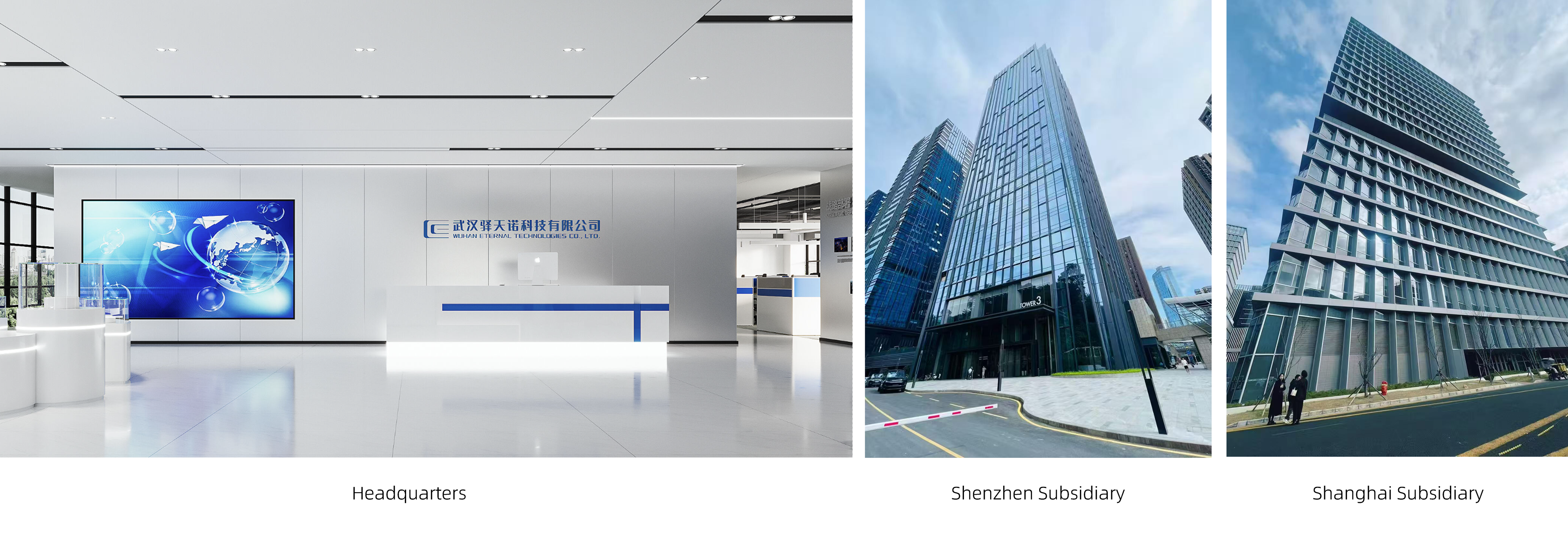
To further meet the explosive demand for silicon photonics mass production and deepen regional industrial synergy, the company is actively deploying subsidiaries in core silicon photonics industry clusters such as Shenzhen and the Yangtze River Delta. The Shenzhen subsidiary is already operational, while the Yangtze River Delta region is focusing on developing trade and collaborative R&D businesses, leveraging the local industrial cluster advantages to improve customer response efficiency and expand market resources.
Summary: Empowering mass production through independent innovation
Facing the industrial opportunities presented by the explosive growth of silicon photonics mass production, Wuhan Eternal will continue to prioritize independent innovation as its core strategy. By significantly increasing the proportion of self-developed components , coupled with full-chain R&D support, industry-academia-research collaboration, and a flexible service system, it has built a mass production response system encompassing "autonomous core components + full product matrix coverage + fullprocess service capabilities." This breaks through the blockade of core technologies and components, ensuring the supply chain's self-control during the gradual explosive growth of silicon photonics mass production. Simultaneously , it achieves product performance benchmarks against international leading levels, providing cost-effective mass production solutions for leading domestic and international chip and optical module manufacturers, thus contributing to the high-quality development of the AI industry.